Our Apiary
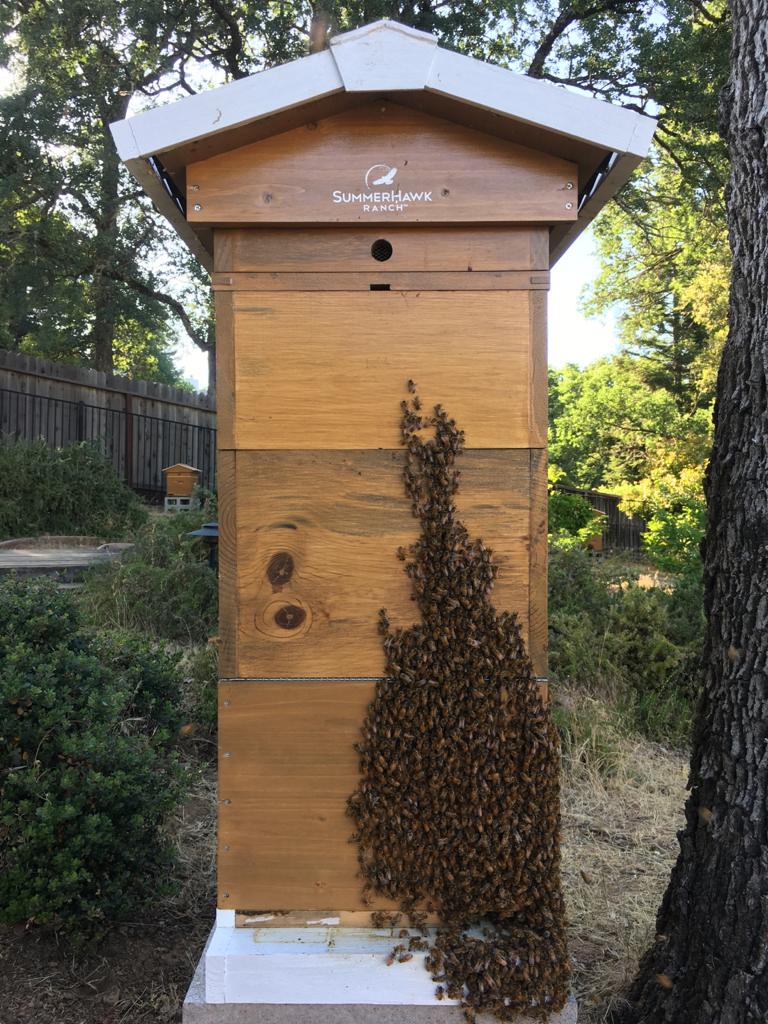
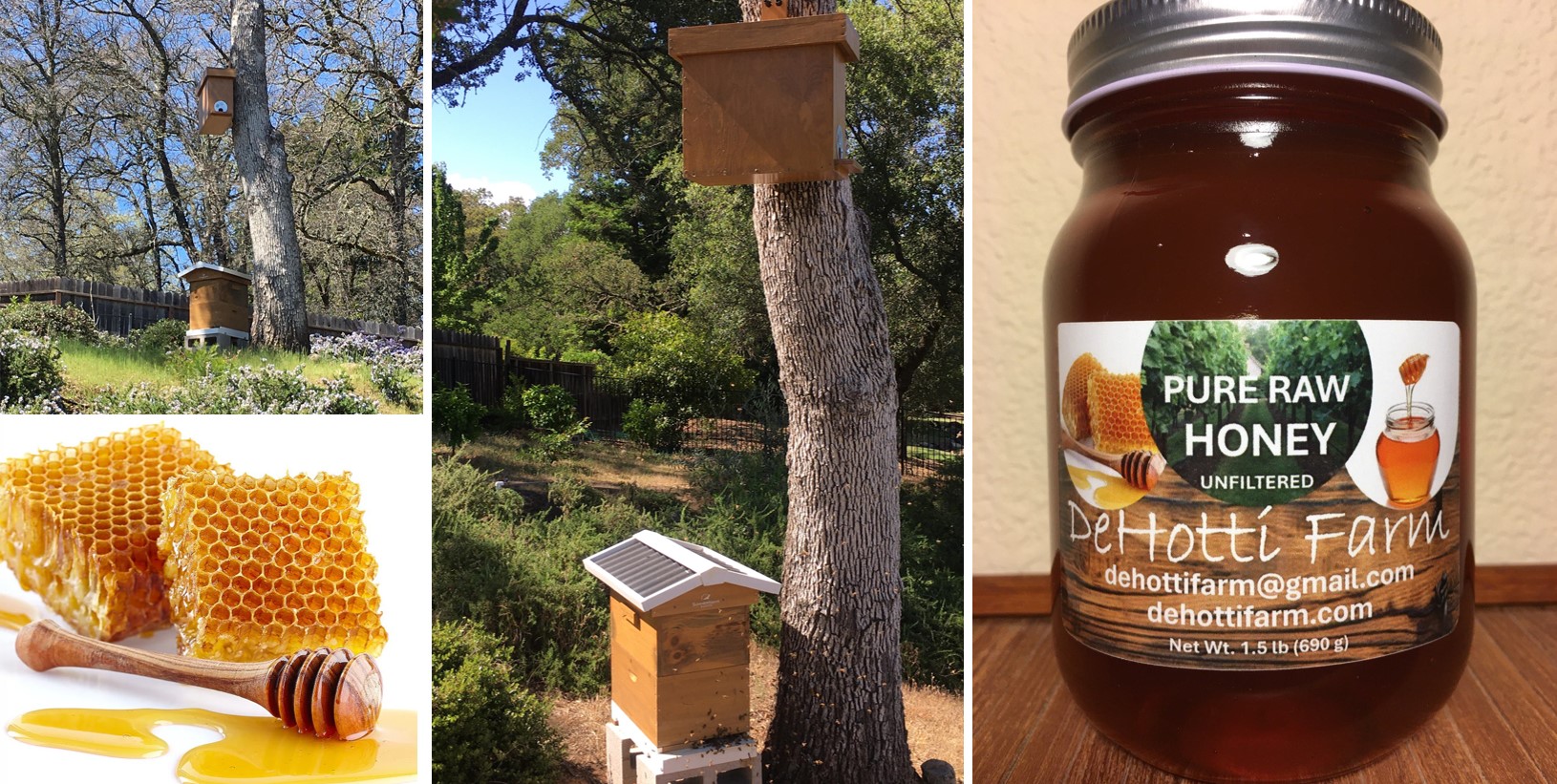
As an addition to our farm, we started backyard apiary, a fantastic way to support local pollinators, produce honey,
and engage in a sustainable, rewarding hobby.
Honeybees play a crucial role in pollination, helping to increase the yields of many of the crops we already been growing in our farm.
Our backyard apiary is a fulfilling and educational endeavor, helping us become more connected to nature while producing honey and supporting the local ecosystem.
It requires patience and learning, but the rewards, from fresh honey to pollinated plants and a deeper appreciation for bees, are well worth it.
An apiary is a place where beehives are kept, and it's often referred to as a "bee yard" (read more).
Honeybees play a crucial role in pollination, helping to increase the yields of many of the crops we already been growing in our farm.
Our backyard apiary is a fulfilling and educational endeavor, helping us become more connected to nature while producing honey and supporting the local ecosystem.
It requires patience and learning, but the rewards, from fresh honey to pollinated plants and a deeper appreciation for bees, are well worth it.
An apiary is a place where beehives are kept, and it's often referred to as a "bee yard" (read more).
In DeHotti Farm we manage, raise and care for honeybees for honey production, pollination, or other purposes like beeswax harvesting.
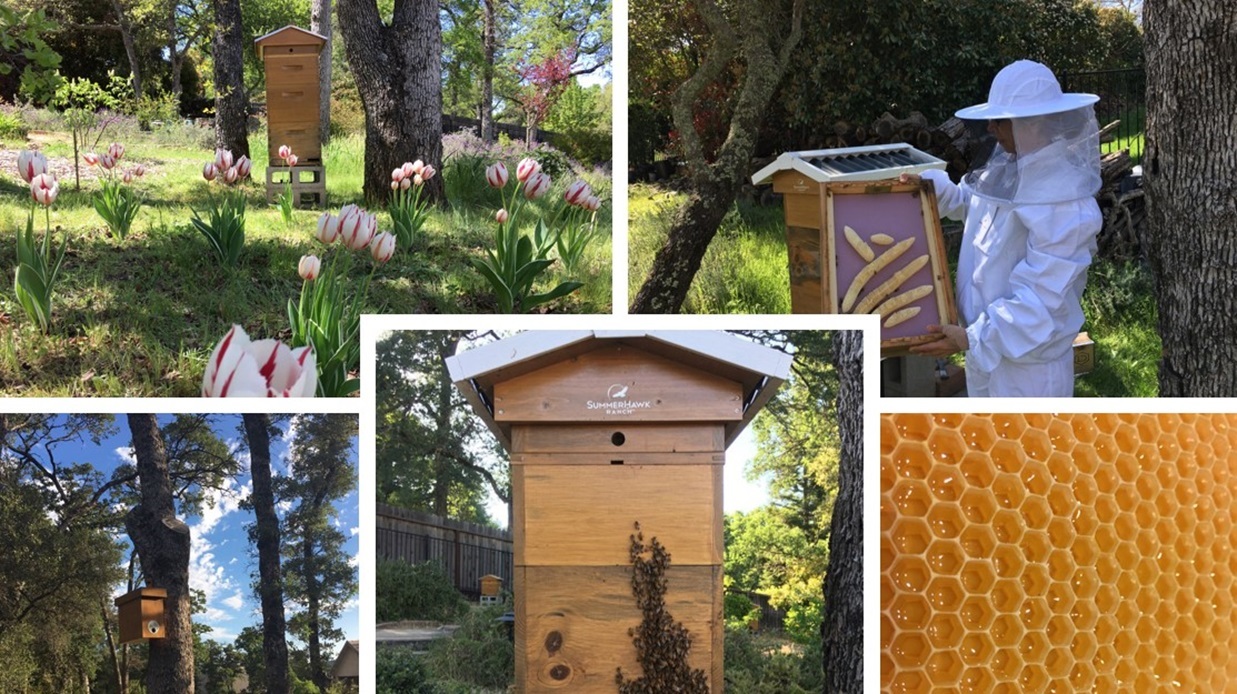
In our apiary, we maintain multiple beehives, which house the bees and allow them to perform their natural behaviors, such as foraging for nectar and pollen.
Our responsibilty is to ensure the health of our bee colony, monitor for pests or diseases, and harvest honey and other products when appropriate.
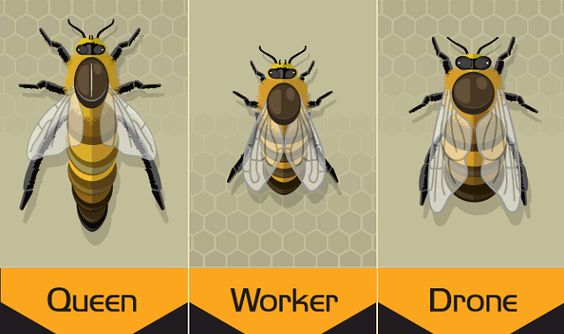
The Bee Colony: A bee colony is made up of three types of bees:
- Queen: The egg-laying female.
- Worker Bees: Female bees that do all the jobs in the hive (collecting nectar, building honeycomb, etc.).
- Drones: Male bees whose main job is to mate with a queen.
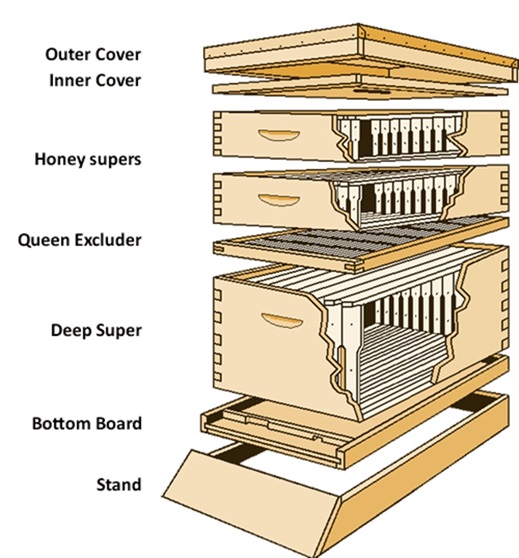
Hive Components, a typical beehive consists of several parts:
- Hive Stand: A base to keep the hive off the ground.
- Brood Box: The part of the hive where the queen lays eggs and the workers raise larvae.
- Supers: Boxes placed above the brood box for honey storage.
- Frames: Wooden structures with foundations on which bees build their honeycombs.
- Hive Cover: A protective top to shield the hive from weather.