Honeybee Varrao Mite
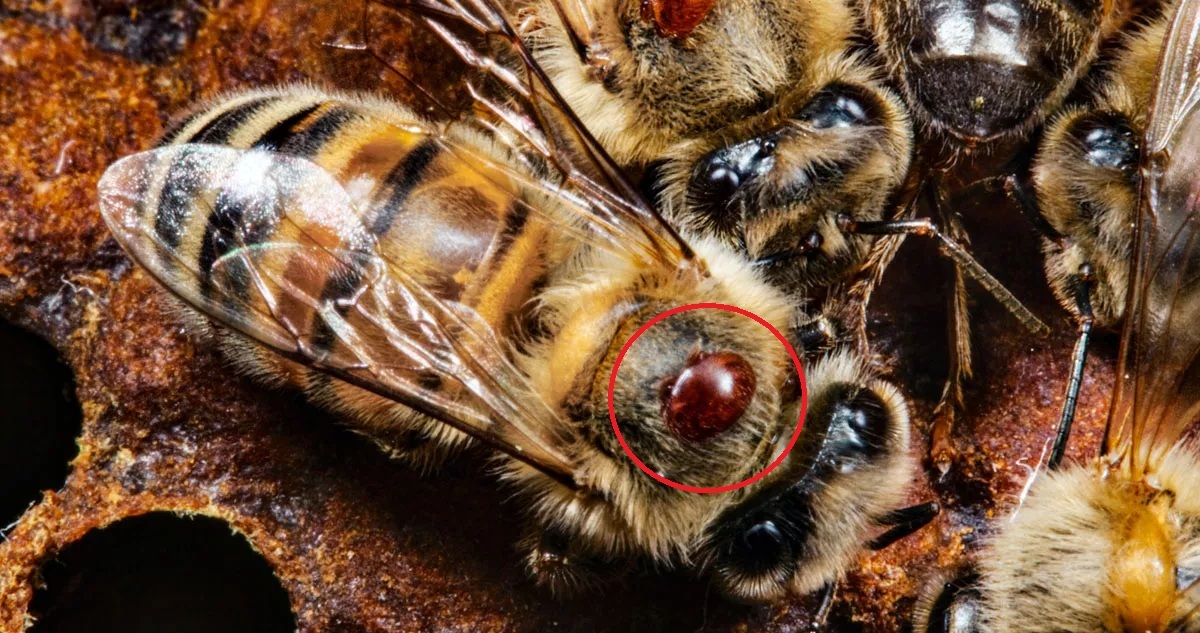
Varroa destructor is a parasitic mite that feeds on honeybee fat bodies and hemolymph. It is one of the most serious threats to bee health worldwide.Varroa mites weaken honeybees by feeding on their fat bodies and spreading viruses, reproduce inside capped brood cells (especially drones), cause symptoms like deformed wings and dwindling colonies, and spread through drifting bees, robbing, swarming, and contaminated beekeeping equipment.
The Varroa mite life cycle begins when a mature female mite enters a honeybee brood cell just before it is capped; once sealed, she feeds on the developing bee and lays eggs—first a male, then several females—which mate inside the cell, and the mated daughters emerge with the adult bee to infest new hosts.
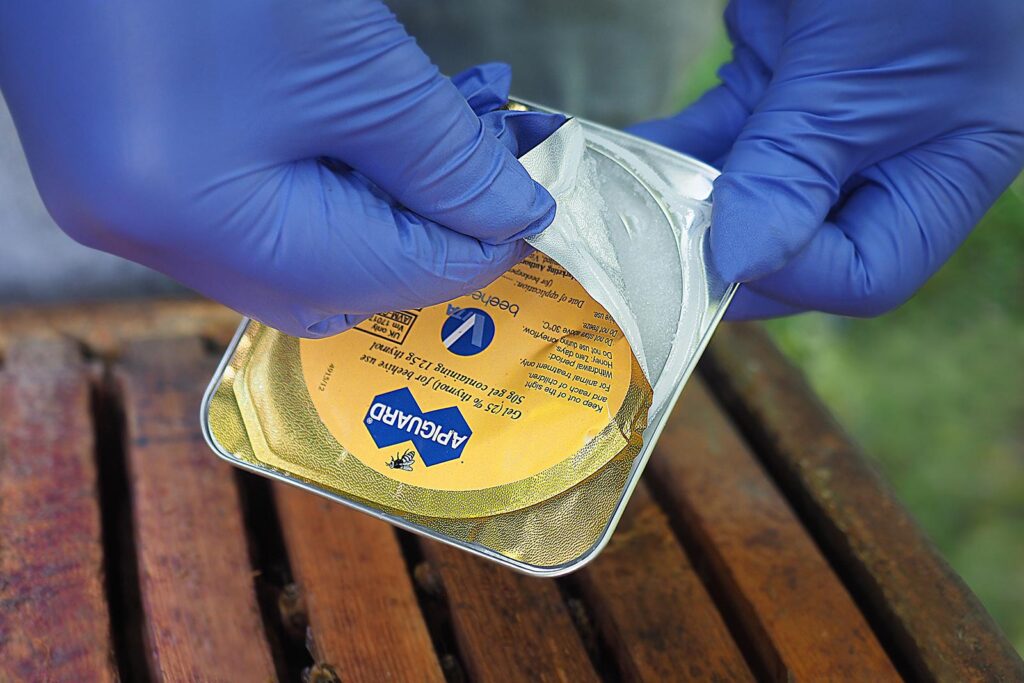
If you're in Sacramento, California, the ideal time to treat honey bee colonies with Apiguard is late summer to early autumn, typically mid-August to early September, after the honey supers have been removed and before the onset of colder weather.
Timing:
- Temperature Matters: Apiguard relies on active bees to distribute its thymol gel. It works best when daily temperatures are above 60 °F. Cooler temperatures reduce bee activity and hamper effectiveness.
- Avoid Extreme Heat: Very high temperatures can cause the Apiguard to evaporate too quickly, reducing its effectiveness and potentially causing the bees to abscond.
- Apply late afternoon: Apiguard can be applied at any time of day but for best results treat colonies in the late afternoon or evening when the temperature is lower and the bees are in, or returning to the hive.
- Fall Prep for Winter Bees: Treating in late summer/early autumn helps reduce Varroa mite loads before winter bees are reared, which is crucial in preventing transmission of harmful viruses like Deformed Wing Virus (DWV).
- Avoid Honey Flow: To prevent tainting honey, it's recommended to apply Apiguard after honey supers are removed, not during a nectar flow.
Considerations:
- Use a wooden shim: A shim is essentially a rectangular frame the same outer dimensions as your brood box or super, with the thickness of 3/8 inch. ApiGuard trays need about 1/4" to 3/8" (6–10 mm) clearance above the frames. To provide that extra vertical space above the top bars of the frames so the gel can evaporate and spread effectively, a shim can be used.
- Placement: Place the shim directly on top of the brood box. Set the ApiGuard tray centered on top of the frames. Place the inner cover above the shim, then the hive lid.
- Scrape: Scrape away any burr comb to create space for the Apiguard tray.
- Ensure Airflow: Open all entrances to the hive to provide sufficient airflow for the thymol vapors to escape, as they are heavier than air.
Treatment:
- First dose: Place one Apiguard tray in the hive. Leave it for 2 weeks.
- Second dose: After 2 weeks, replace the first with a new tray and leave for another 2–4 weeks, depending on colony activity.
Provide good ventilation, and consider strategic placement of the Apiguard tray directly above the brood nest, ensuring bees can access and spread the gel.